
Paycheck Protection Program (PPP) Fraud Continues to Add Up
The Paycheck Protection Program (PPP) was designed to deliver emergency financial relief to businesses during the COVID-19 pandemic. But the program’s unprecedented scale also created unprecedented opportunities for fraud. The Small Business Administration (SBA) ultimately guaranteed roughly $800 billion across more than 11 million PPP loans, making it one of the largest federal emergency lending programs in U.S. history. Years later, the enforcement landscape continues to develop, with False Claims Act (FCA) settlements putting real numbers behind the government’s efforts to recover misspent funds.
What, exactly, constitutes PPP fraud? In broad terms, enforcement actions have involved borrowers or lenders allegedly making false statements or certifications to obtain PPP loans, receive larger loans than they were eligible for, or obtain loan forgiveness. Examples include misrepresenting the number of employees or payroll costs, failing to account for affiliated entities when determining eligibility, applying despite being ineligible under PPP rules, submitting false supporting documents, and seeking forgiveness based on inaccurate eligibility or use-of-funds representations. Some cases have involved lenders allegedly facilitating or submitting false claims themselves.
According to The Anti-Fraud Coalition (TAF) data1, since 2022, there have been 189 PPP fraud settlements/judgments totaling more than $623 million. Approximately 73% of those matters were cases in which the government intervened, while about 26% were brought directly by the government. Since 2024, the majority of cases have been brought by the government.
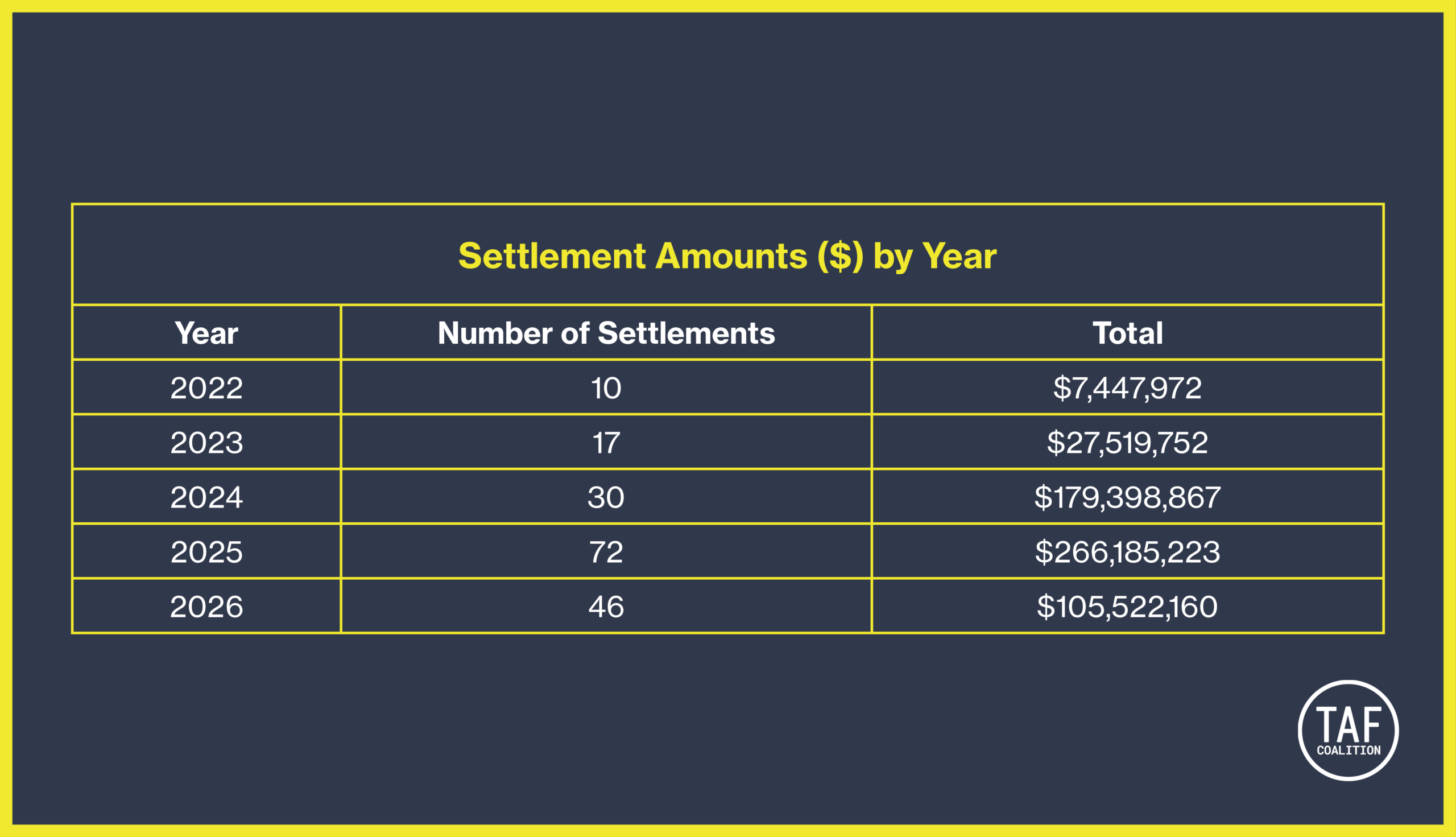
The pace of settlements has also increased substantially. There were 10 settlements totaling approximately $7.4 million in 2022 and 17 totaling $27.5 million in 2023. That number jumped to 30 settlements and nearly $179.4 million in 2024, followed by 72 settlements totaling approximately $266.2 million in 2025. Through the beginning of September 2026, another 60 settlements totaling approximately $142.6 million had been recorded.
The numbers reveal an important feature of PPP enforcement: the largest recoveries can be driven by a small number of cases. PPP cases in the banking industry, for example, account for just three settlements but approximately $127.8 million in recoveries. That figure is largely attributable to a single 2024 qui tam action in the District of Massachusetts involving Kabbage, Inc., which settled for up to $120 million—the largest PPP settlement by a significant margin and one that involved two separate whistleblower actions.
At the same time, most PPP FCA settlements are considerably smaller. Based on TAF’s data, about 93% of the settlements were for less than $10 million: approximately 32% were below $1 million, while approximately 61% were more than $1 million but less than $10 million. Put differently, nearly one-third of all settlements were for less than $1 million. Only 9 cases fell between $10 million and $50 million, and one exceeded $100 million. The data therefore show both the breadth of enforcement and the outsized effect that a handful of large matters can have on aggregate recovery figures.
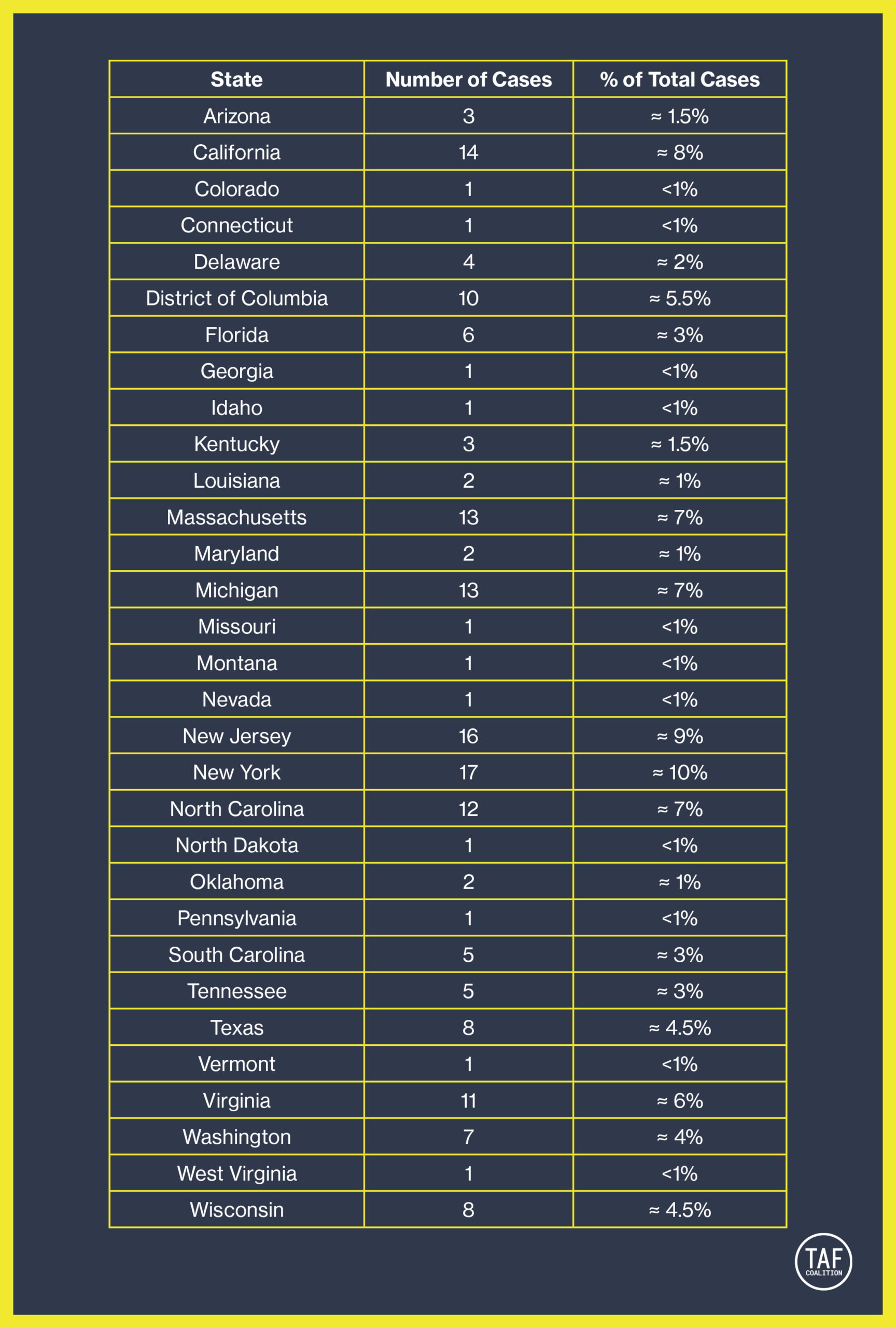
The data also illustrate the range of industries and geographies captured in enforcement. Forty-five settlements involving industrial goods account for more than $124.6 million, while 10 healthcare/pharmaceutical settlements total approximately $56.8 million. More than half of all settlements involved entities such as nonprofits, churches, unions, think tanks, small businesses, and individuals—representing approximately $237.1 million in recoveries. Geographically, New York and New Jersey lead the dataset with 17 settled cases each, followed by California with 14. But settlement dollars tell a different story: excluding Massachusetts because of the $120 million Kabbage settlement, Wisconsin leads with approximately $62.2 million across eight cases.
The broader numbers provide useful perspective. PPP ultimately involved roughly $800 billion in loans across more than 11 million loans, and SBA had forgiven approximately $760 billion by May 2024. Against that backdrop, the more than $586.3 million reflected in the 177 settlements in TAF’s data represents only a portion of the program’s overall financial exposure—and, importantly, these settlement figures should not be treated as an estimate of total PPP fraud.
The takeaway is clear: PPP fraud enforcement is not over simply because the emergency program has ended. The continuing stream of FCA settlements demonstrates that alleged misconduct surrounding PPP applications, loan amounts, and forgiveness can remain an enforcement priority years after funds were distributed. For businesses that participated in the program, the numbers underscore the importance of understanding the accuracy of representations made to lenders and the government—and the potentially significant consequences when those representations prove false.
This piece was written by Jagir Patel, an Associate at Phillips & Cohen
1 All TAF data is derived from available press releases and news sources.
